
Blog
SEO Best Practices 2026: 7 Powerful Rules to Double Your Traffic

Intro
Understanding SEO Best Practices 2026 is the single most important step for small businesses trying to attract customers online today. Now that Google AI Overviews and conversational chat features dominate the internet, the way people search has completely changed. Users no longer just click on plain links; they want immediate, highly accurate answers. As a small business owner, if your website fails to adapt to these new digital rules right from the start, you risk losing massive amounts of organic traffic to your competitors. But there is no need to worry. At Grobit, we have decoded the exact metrics that are moving the needle this year. In this comprehensive guide, we will break down the mandatory strategies that will make your business website highly authoritative for both search engines and AI models alike.
Table of Content
1. Mastering AI Search and Generative Engine Optimization (GEO)

Search engines have evolved far beyond the traditional “ten blue links.” Platforms are now shifting heavily toward AI ecosystems like Gemini and ChatGPT Search. To stay ahead, you must optimize your content not just to rank on Google, but to be actively cited as a primary source within AI-generated responses.
-
Lead with an Answer Capsule: Always provide a clear, direct answer within the first 50 words of your primary sections. AI engines favor these concise blocks and easily pull them for snippets.
-
Structure for Citations: Heavily utilize bullet points, numbered lists, and structured statistical data. Clear formatting helps AI crawlers seamlessly comprehend your value.
-
Optimize for AEO: For Answer Engine Optimization (AEO), keep your writing style conversational, mirroring how real people naturally speak or voice-search their queries.
2. E-E-A-T 2.0: Why Real Experience Matters Most Now
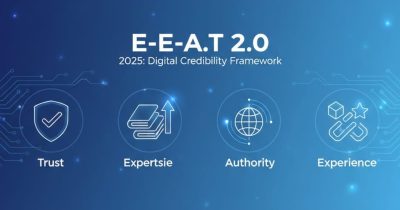
Google’s March 2026 Core Update severely impacted websites that flooded the internet with generic, mass-produced AI content. Today, the ultimate ranking metric is true E-E-A-T (Experience, Expertise, Authoritativeness, Trustworthiness).
Author Profiles and Credentials
-
Incorporate real author biographies detailing your professional background, and link them directly to verified LinkedIn profiles.
-
Search engines are actively deprioritizing content published under anonymous, faceless, or unverified aliases.
Case Studies and Real-world Data
-
Move past generic theory; actively share real-life business examples, proprietary customer testimonials, and data-driven results.
-
Back your claims by linking out to industry authorities. For example, you can reference the latest search updates directly from the Google Search Central Blog or pull industry data from trusted digital marketing whitepapers.
3. Technical SEO: Speed & Mobile-First Indexing
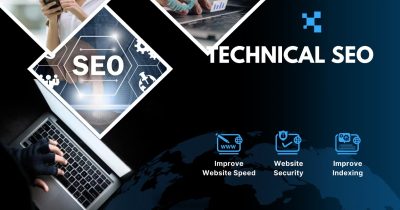
If your website loads slowly or breaks on a smartphone, your content efforts won’t matter. Search engines firmly treat Page User Experience (UX) as a core baseline for rankings.
-
Image Optimization: Always utilize modern Next-Gen formats like WebP or AVIF and compress your media files aggressively to maintain lightning-fast load times.
-
Clean URL Structure: Keep your URLs exceptionally short, clean, and focus-keyword descriptive, exactly like the streamlined slug used for this blog post.
4. User Intent and Building Topical Authority
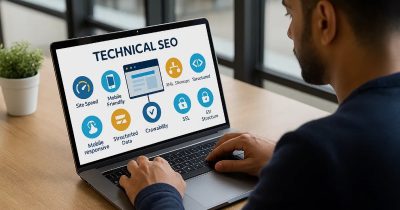
Keyword stuffing is completely dead in 2026. Advanced semantic search engines now evaluate the entire depth of a topic rather than scanning for isolated keyword matches.
-
Map the Buyer Journey: Structure your information to address every stage of a small business owner’s journey—from informational intent (learning) to transactional intent (buying).
-
Create Topic Clusters: Instead of publishing isolated blog posts, design interconnected webs of content. For instance, you can seamlessly link this guide internally to our main core hub at Grobit Digital Marketing Services to build a powerful authority network.
-
Utilize Semantic Entities: Weave in highly relevant conceptual terms and contextual phrases so that search engine knowledge graphs easily identify your business as an industry expert.
Frequently Asked Questions (FAQs)
What is the most critical SEO Best Practice in 2026 for small business owners?
The most critical practice is optimizing for Generative Engine Optimization (GEO) and embedding deep E-E-A-T (genuine experience and transparent data) into your content. Focus entirely on providing clear solutions to real user pain points rather than simply chasing raw keyword volume.
Can AI-generated content still rank effectively on Google?
Yes, but only if it is backed by thorough human editing, real-world case studies, unique perspectives, and distinct added value. Search engines are highly efficient at filtering out generic, copy-pasted AI scripts.
How should a local small business kickstart its SEO strategy?
Begin by fully optimizing your Google Business Profile, actively acquiring genuine customer reviews, ensuring your website is flawlessly mobile-optimized, and publishing helpful, highly-localized content tailored to your community.
Conclusion
The digital marketing landscape is shifting rapidly, and the successful SEO Best Practices 2026 heavily revolve around trust, unshakeable authority, and fluid user experience. As a small business owner, scaling your brand doesn’t require a massive enterprise budget—it simply requires a smart strategy and the right structural blueprint. If you are ready to evaluate your current online standing with a comprehensive website SEO audit or want to scale your business traffic, connect with our expert team today.
Follow for more updates on our social platforms:
Stay connected with us on:
Don’t miss out on the latest updates, insights, and content!