
Blog
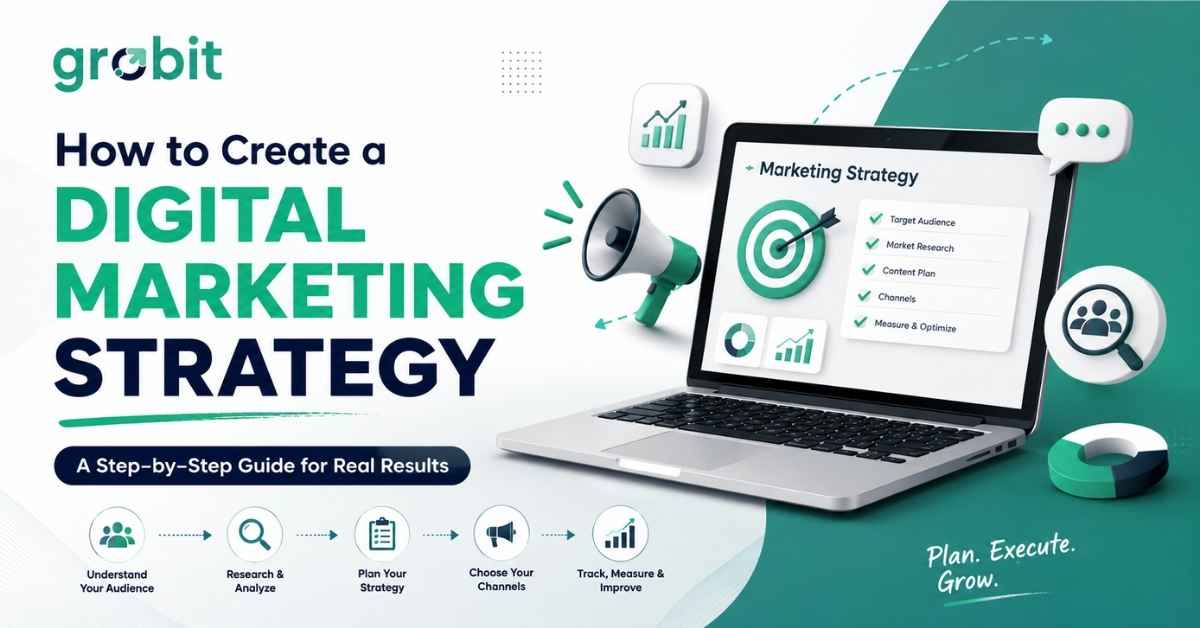
How to Create a Digital Marketing Strategy: 7 Powerful Steps to Grow Your Business

Introduction
In today’s competitive digital world, having an online presence is important for every business, but simply being online does not guarantee growth. A business needs a clear direction to attract the right audience, build trust, generate leads, and increase sales. This is why learning how to create a digital marketing strategy is important for businesses that want to grow consistently.
A digital marketing strategy provides a roadmap for your online marketing activities. It helps you understand your target audience, choose the right marketing channels, create useful content, manage your budget, and measure your performance. Whether you are a small business, startup, e-commerce brand, or service provider, a well-planned strategy can help you make better marketing decisions.
What Is a Digital Marketing Strategy?

A digital marketing strategy is a structured plan that explains how a business will use online platforms and marketing channels to achieve specific business goals. These channels can include Search Engine Optimization (SEO), Social Media Marketing, Google Ads, Content Marketing, Email Marketing, Local SEO, and website marketing.
The main purpose of a digital marketing strategy is to connect your business with the right people at the right stage of their buying journey. Instead of randomly publishing content or spending money on advertisements, you create a plan where every marketing activity has a specific objective.
How to Create a Digital Marketing Strategy?
Creating a digital marketing strategy requires proper planning and research. You need to understand your business objectives, target audience, competitors, marketing channels, content requirements, budget, and performance metrics before starting your campaigns.
1. Set Clear and Measurable Marketing Goals
The first step in creating a digital marketing strategy is defining what you want to achieve. Your marketing goals should be connected to your overall business objectives. You may want to increase website traffic, generate more leads, improve brand awareness, increase online sales, get more phone calls, or attract customers from a particular location.
Your goals should be specific and measurable. For example, instead of saying “I want more leads,” you could set a goal of generating 50 qualified leads from your website every month. Clear goals make it easier to select the right marketing channels and measure your progress.
2. Understand Your Target Audience
After defining your goals, you need to understand who your ideal customers are. A successful digital marketing strategy focuses on solving customer problems rather than simply promoting products or services.
Research your audience’s age, location, interests, profession, purchasing behavior, challenges, and online habits. Find out what they search for on Google, which social media platforms they use, and what information they need before making a purchasing decision. Understanding your audience allows you to create relevant content and marketing campaigns.
3. Analyze Your Competitors
Competitor analysis can provide valuable insights when developing your strategy. Research businesses operating in your industry and analyze their websites, SEO performance, social media content, advertisements, blog topics, offers, and customer reviews.
The goal is not to copy competitors. Instead, identify what they are doing well and where they have weaknesses. These gaps can help you find opportunities to create better content, improve your customer experience, and differentiate your business from competitors.
4. Choose the Right Digital Marketing Channels
Every business does not need to use every digital marketing platform. The right channels depend on your audience, business model, marketing goals, budget, and industry.
SEO can help businesses attract long-term organic traffic, while social media marketing can increase brand awareness and audience engagement. Google Ads can help businesses reach users who are actively searching for specific products or services. Content marketing can build authority and trust, while Local SEO can help businesses attract customers from specific geographic locations.
Choosing the right combination of channels allows you to focus your resources where they are most likely to generate results.
5. Create Valuable and Relevant Content
Content is a major part of digital marketing because it helps attract, educate, and engage potential customers. However, content should not be created simply to fill a social media calendar. Every piece of content should have a clear purpose.
Create content that answers customer questions, solves problems, and demonstrates your expertise. Depending on your business, this could include blog articles, videos, Reels, social media posts, guides, case studies, infographics, and FAQs.
A strong content strategy can take users through a journey from awareness to trust and finally to conversion.
6. Set a Realistic Budget and Marketing Plan
A digital marketing strategy should include a realistic budget and timeline. Decide how much you can invest in SEO, paid advertising, content creation, social media management, website improvements, and other marketing activities.
You should also create a marketing calendar to organize your campaigns and content. Planning your activities in advance helps maintain consistency and makes it easier to manage different marketing channels.
Your budget does not need to be large from the beginning. Start with channels that are most relevant to your audience, measure their performance, and increase your investment when you identify what works.
7. Measure Results and Optimize Your Strategy
The final step is to continuously measure and improve your digital marketing strategy. Marketing decisions should be based on data rather than assumptions.
Track important metrics such as website traffic, leads, conversions, keyword rankings, engagement rate, click-through rate, cost per lead, and Return on Ad Spend. These metrics can help you understand which marketing activities are producing results.
If a campaign or piece of content is not performing well, analyze the reason and make improvements. You may need to update your content, change your targeting, improve your landing page, or adjust your advertising message. Digital marketing works best when you continuously test, measure, and optimize your approach.
Why Is a Digital Marketing Strategy Important?
A digital marketing strategy gives your business a clear direction. Without a strategy, businesses often waste time creating content, running advertisements, or managing social media without knowing whether these activities are contributing to their goals.
With a proper strategy, you can target the right audience, use your marketing budget more efficiently, create consistent content, generate better leads, and measure your progress. It also helps your business adapt to changing customer behavior and digital trends.
Common Digital Marketing Strategy Mistakes to Avoid
One common mistake is trying to use every digital marketing platform at the same time. This can make the marketing process difficult to manage and reduce the quality of the content. Businesses should focus on the channels where their target audience is most active.
Another common mistake is creating content without understanding what the audience actually wants. Some businesses also focus too much on likes, followers, and traffic while ignoring leads, conversions, and revenue. A successful strategy should focus on meaningful business outcomes rather than vanity metrics.
Frequently Asked Questions
What Is a Digital Marketing Strategy?
A digital marketing strategy is a structured plan that explains how a business will use online marketing channels to achieve goals such as increasing traffic, generating leads, improving brand awareness, and increasing sales.
How Do I Create a Digital Marketing Strategy?
To create a digital marketing strategy, start by defining your goals and understanding your target audience. Then research your competitors, select the right marketing channels, create valuable content, optimize your website, set a budget, track your performance, and continuously improve your strategy.
Which Digital Marketing Channel Is Best?
There is no single digital marketing channel that works best for every business. The most effective channel depends on your target audience, industry, location, budget, and objectives. A combination of SEO, content, social media, paid advertising, and Local SEO may work well depending on the business.
How Long Does It Take to See Results From Digital Marketing?
The timeline varies depending on the channel and competition. Paid advertising can generate results quickly, while SEO and content marketing generally require consistent effort over several months to build sustainable results.
How Can I Measure My Digital Marketing Strategy?
You can measure your strategy using website traffic, leads, conversions, keyword rankings, engagement, click-through rate, cost per lead, customer acquisition cost, and Return on Ad Spend. The most important metrics should always be connected to your business goals.
Is Digital Marketing Important for Small Businesses?
Yes, digital marketing can help small businesses reach their target audience, improve online visibility, generate enquiries, build customer trust, and compete with larger businesses. A focused strategy can also help small businesses use their marketing budget more effectively.
Conclusion
Learning how to create a digital marketing strategy is essential for businesses that want to build a strong and sustainable online presence. A successful strategy starts with clear goals and a deep understanding of your target audience. From there, you can research competitors, choose the right marketing channels, create valuable content, set a realistic budget, and measure your performance.
Remember that digital marketing is not a one-time activity. Your strategy should continuously evolve based on data, customer behavior, market trends, and campaign performance. By following the process of Plan → Execute → Measure → Optimize, you can create a digital marketing system that consistently supports your business growth.
Follow for more updates on our social platforms:
Stay connected with us on:
Don’t miss out on the latest updates, insights, and content!