
Blog
What Is Content Marketing? Complete Guide for Beginners


Introduction
People today rarely make a purchase decision after seeing just one advertisement. They search on Google, watch videos, read blogs, check social media, and compare different businesses before choosing one. This is why Content Marketing has become an important part of digital marketing. Instead of constantly promoting a product or service, businesses use Content Marketing to provide useful information, answer customer questions, solve problems, and build trust. From a simple blog post to an informative video or social media post, good content can help a business attract the right audience and turn visitors into potential customers.
What Is Content Marketing?
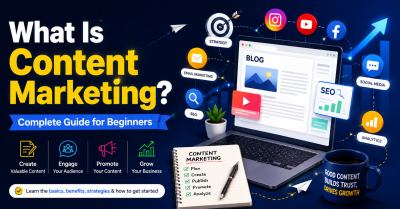
Content Marketing is a marketing approach where a business creates and shares valuable, relevant, and useful content for a specific target audience. The content can be in many forms, including blogs, videos, social media posts, infographics, podcasts, ebooks, newsletters, and case studies. For example, a digital marketing agency might publish a blog explaining “How SEO Can Help a Small Business.” A business owner searching for this information may discover the agency through Google. If the article provides a genuine solution, the reader may eventually explore the agency’s services. The basic idea is simple: provide value first and promote your business naturally.
How Does Content Marketing Work?
The process usually starts with understanding your audience. A business needs to know what its customers are searching for, what problems they have, and what information they need before making a purchase. After identifying these topics, the business creates useful content and publishes it on suitable platforms. Search engines, social media, email, and other channels can then help distribute that content. Over time, consistent Content Marketing can bring more visitors to a website, increase brand awareness, establish authority, and generate leads.
Types of Content Marketing
There are several Types of Content Marketing, and businesses can choose formats according to their audience and goals. Blogging is useful for answering search queries and attracting organic traffic. Video content can explain products, services, or complex topics in a simple way. Social media content helps businesses stay connected with their audience. Other formats include podcasts, newsletters, ebooks, infographics, webinars, case studies, and customer success stories. Using different formats can help a business reach people with different content preferences.
Benefits of Content Marketing
One of the biggest Benefits of Content Marketing is its ability to create long-term value. A useful article published today can continue attracting visitors from search engines months or even years later. It can also improve brand credibility. When a company consistently shares useful knowledge, potential customers may begin to see that business as an experienced and trustworthy source. Other benefits include increased website traffic, stronger brand awareness, better SEO performance, audience engagement, lead generation, and improved customer relationships.
Content Marketing for Small Businesses
Content Marketing for Small Businesses can be especially useful because it allows them to compete for attention without relying entirely on expensive advertising. For example, a local jewellery store can publish articles about jewellery buying tips, wedding jewellery trends, or how to choose gold jewellery. A restaurant could create content about popular dishes, local food trends, or dining tips. The key is to create content around real customer questions instead of writing only promotional posts. This makes the content more useful and gives potential customers a reason to discover the business.
Content Marketing vs Traditional Advertising
Traditional advertising generally focuses on delivering a direct promotional message. A newspaper advertisement, billboard, or paid online advertisement may tell customers about a product, service, or special offer. Content Marketing, on the other hand, focuses on providing information and building a relationship with the audience. Traditional advertising can provide quick visibility, while content can continue attracting and educating people over a longer period. Both approaches can work together, depending on the business’s objectives and budget.
How to Create a Content Marketing Strategy
A successful Content Marketing Strategy starts with clear goals. Decide whether you want to increase website traffic, generate leads, build brand awareness, or improve customer engagement. Next, identify your target audience and research the questions they commonly search for. Select relevant topics and keywords, create genuinely helpful content, and publish it consistently. Finally, measure performance using metrics such as organic traffic, rankings, engagement, leads, and conversions. Based on the results, improve existing content and plan future topics.
Common Content Marketing Mistakes
Many businesses make the mistake of creating content without understanding their audience. Publishing large amounts of low-quality content will not automatically produce better results. Other common mistakes include keyword stuffing, copying competitors, creating overly promotional content, ignoring SEO, publishing inconsistently, and failing to promote content after publishing it. The goal should not simply be to publish more. The goal should be to create useful, original, and audience-focused content.
Conclusion
Content Marketing is not simply about writing blogs or posting regularly on social media. It is a long-term marketing approach focused on attracting the right audience, providing value, building trust, and supporting business growth. With proper audience research, useful content, SEO optimization, consistent publishing, and regular performance analysis, businesses can turn content into a valuable source of traffic, authority, and leads.
Frequently Asked Questions
1. What is Content Marketing in simple words?
Content Marketing means creating useful and relevant content to attract an audience, build trust, and encourage potential customers to engage with a business.
2. Is Content Marketing useful for small businesses?
Yes. Small businesses can use blogs, videos, social media posts, and other content formats to reach potential customers and build online visibility.
3. How long does Content Marketing take to show results?
Results depend on factors such as competition, content quality, website authority, and consistency. SEO-focused content can take several weeks or months to generate significant organic traffic.
4. Is blogging part of Content Marketing?
Yes. Blogging is one of the most common forms of Content Marketing. It can help businesses answer customer questions, build authority, and attract visitors through search engines.
5. What is the main goal of Content Marketing?
The main goal is to attract and engage the right audience by providing valuable information while supporting business objectives such as traffic, leads, sales, and brand awareness.
For more information:- www.grobit.com
https://www.instagram.com/grobit3/